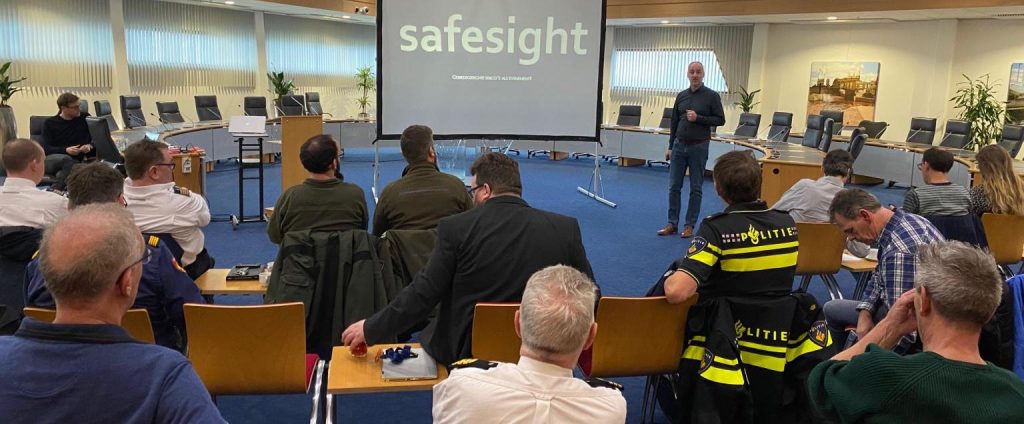
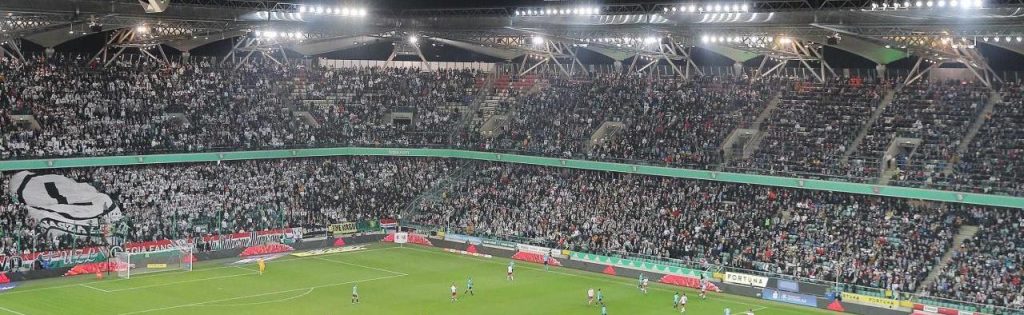
Governments such as municipalities and safety regions also use Safesight to work together on safety in an easy way. Below are five ways in which they use our platform.
1. In an ECC during events
During an event – such as King’s Day or Carnival – municipalities sometimes set up a temporary Event Control Center (ECC). In the run-up to and during the event, this ECC is the beating safety heart of – for example – a city centre.
In the ECC, representatives of all disciplines involved work together on coordinating and directing the various parties in the field. Of course the municipality, police, medical services and the Safety Region – but also, for example, the railways and private parties such as security and first aid organisations.
All information held by the various disciplines is brought together and interpreted in the ECC. The Safesight logbook is the central hub here. This is where those involved – from their own discipline – log all particulars, measures and issues relating to the safety and continuity of the event. By the representatives present in the ECC, but possibly also – via the app – by people in the field. Think of reports about crowding and crowd management, the atmosphere in the different areas and potentially dangerous situations that need to be resolved.

2. In a permanent control room
Some municipalities have a permanent control room – for example for the Enforcement department. Here, dispatchers work 24/7 on all kinds of reports. Safesight is also used in these kinds of permanent control rooms to easily record, monitor and handle reports.
Working with the Safesight logbook enables dispatchers to easily record and exchange information – within a predefined framework. Particulars are recorded clearly and unambiguously. This makes communication easier and more efficient, and reduces the risk of misunderstandings.
In addition, the platform helps to gain insight into what is actually happening where. Organisations can adjust their processes – and perhaps also their rosters – accordingly. Think of insights into (expected) crowding at certain hotspots, on the basis of which the route of the outdoor team can be adjusted. Or starting shifts earlier or later because there are extra reports at such hotspots around certain times. This is how organisations use Safesight data to continuously and concretely improve their organisation.
3. For the internal on-call or emergency service
Ensuring public safety and liveability is an ongoing task for municipalities. Even outside regular working hours, it must be possible to act quickly and effectively in unexpected situations or emergencies.
Safesight helps government on-call services respond adequately to incidents and emergencies and record all relevant information (such as the event, follow-up actions, those responsible and decisions taken) in a structured and clear way. So no loose notes or manual handovers – everything clearly in one place. Even when team members change shifts or new people get involved, the logbook serves as a reference to quickly get up to speed on what has happened, what still needs to be done and which decisions have been taken.
Safesight also helps to easily analyse incidents (and actions taken) and discover patterns and trends. And this in turn helps in taking any preventive measures.
4. For good public/private cooperation on foreseeable risks
Safety regions use Safesight (among other things) to manage certain foreseeable risks – together with their public and private safety partners.
For example the wildfire risk in the Zeeland Safety Region. Numerous public and private organisations play a role in preventing wildfires: from the fire brigade to the State Forestry Service and from campsite owners to beach pavilions. It is important that cooperation between all these parties runs as smoothly as possible. And that’s what Safesight is used for.
Everything related to the risk of a wildfire is recorded, monitored and handled in the platform. Reports of dangerous situations, but also fires found and temporary closures. By working with fixed topics and locations, everyone reports in the same way. This collects management information in a structured way, which the Safety Region uses to continuously improve the organisation.
5. As a safety management platform for sports facilities
By streamlining processes and reducing safety risks, Safesight plays a role in managing safe sports facilities and swimming pools. For example to record, monitor and handle hazards such as defective facilities, slippery surfaces or unsafe playing conditions. Our action database is used to secure certain measures and checks and thus to demonstrate – in real time – that the location complies with legal requirements and safety standards.
Safesight also offers tools for planning and carrying out regular inspections and maintenance. Think of regularly checking sports fields, sports equipment, fire safety measures and emergency exits. Municipalities can then assign their findings to the maintenance teams and follow progress – again in real time – via the various dashboards.
Finally – use our ‘Report without an app’ feature to let external people such as athletes, coaches or managers easily report incidents, accidents or potential hazards – via a QR code. After scanning the QR code, a web form opens with which the report can be created. The report is recorded in the logbook and then simply picked up, monitored and handled by the organisation via the platform. Working together on safety – also with your visitors!

Want to know more?